
Getting someone out: $80–$180
Standard Sydney call-out for after-hours attendance. Ask before booking, not after the invoice.
The first thing that happens is not a booking. It is a plumber telling you what to shut off right now, because the minutes before anyone arrives are where most of the damage is either done or prevented.
The honest test is whether it is still getting worse while you wait. Water, waste or gas going somewhere it should not, and not stopping. A burst pipe, sewage backing up into the shower, a hot water tank emptying through the ceiling, or any smell of gas: those are emergencies, and waiting until morning multiplies the damage bill.
Then there is the category people apologise for calling about: the only toilet in the house blocked, no hot water with a newborn, a drain backing up the night before an inspection. Call anyway. An after-hours call here reaches a plumber, not a promise of one tomorrow.


Original earthenware gives way at the joints, and it rarely announces itself politely. Roots find the joint, the joint opens, and the section finally lets go on a night with the house full and one bathroom working.
Original clay and brick-lined drains beneath the terraces have served since the 1880s, and their cracked, rough interiors snag everything.
Old pipe is not automatically bad pipe. But when a heritage-era line fails once, it is worth knowing whether you have had one bad joint or a tired run. We clear it, camera it before we leave, and you keep the footage — so any decision about relining is yours to make on evidence rather than on our word.
Grease does not block a line suddenly. It narrows it over months, and the failure arrives on the night of the highest load — a full service, a function, a long weekend.
The venues along Crown and Bourke Streets pour serious fat loads into narrow old sewers, where they harden into concrete-like blockages.
That is why the useful question after a commercial blockage is not what went down the sink tonight, but when the trap was last pumped and the line last jetted. We will give you both dates from what the camera shows, and a realistic interval to keep to.
A drain on a slope moves water fast, and fast is not always good. Waste can outrun the liquid carrying it on a steep run and settle at the first flat section, building up at exactly the same spot each time.
Southerly storms drive water down the slope toward Central and Prince Alfred Park, overloading heritage-era pits and flooding low courtyards.
The tell is a blockage that recurs at the same interval in the same place. That is a gradient problem, not a usage problem, and no amount of careful flushing fixes it — the answer is to see the profile of the line and correct the section that is wrong.
Most homes around Surry Hills have an overflow gully outside — a low grate, often near the back step, that nobody thinks about until it matters. It is deliberately set below the lowest fixture indoors so that when the line blocks, it spills into the garden instead of through your floor.
So a gully running in heavy rain is not a fault. It is the system doing its job and telling you the line downstream of it has stopped taking water. That is the moment to call, not after it reaches the hallway.
The genuine emergency in an older home is often not the size of the fault but the lack of an alternative. A single bathroom out of action with a family in the house is a call-out, whatever the textbook says about severity.
Surry Hills fills the slope between Oxford Street and Central Station in Inner Sydney (postcode 2010), bordered by Darlinghurst, Redfern and Paddington, its Victorian terraces and laneway cafes running on some of the city’s oldest drains. Heritage pipes plus heavy hospitality use make blockages an everyday call-out.
We treat it that way. If it is the only toilet, it goes to the front of the queue — and if we can talk you through getting it usable tonight so the visit can happen at daytime rates tomorrow, we will do that instead and say so on the phone.
Around Surry Hills we work with premises where closing for a day is not a small inconvenience — it is the week's takings and a shift's wages.
So we work to the opening time, not to ours. That means arriving after close where that suits you better, telling you early if the fix will not hold until trade, and giving you the documentation your insurer or landlord will ask for afterwards.
Standard Sydney call-out for after-hours attendance. Ask before booking, not after the invoice.
Roughly $120–$160 in daylight. Someone is out of bed and on the road, and the rate reflects it.
Where most single-fault after-hours jobs land once attendance, labour and small parts are counted.
Slab leaks, gas line work, anything that means opening a wall overnight. You approve the figure first.
We would rather book you for Monday at daylight rates than take a premium for a job that was never urgent.
The price is agreed before work starts, including at 2am. Figures here are indicative of the 2026 Sydney market rather than a quote from us, you get your own number as a fixed price before any work starts.
Before any booking, the person on the phone tells you what to isolate. That call is where most of the damage is either prevented or done.
You are told when someone can actually be there, not a number designed to keep you on the line. If that is ninety minutes, it is ninety minutes.
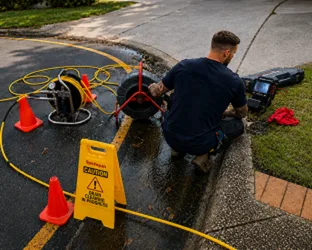
Stop the water, make the area safe, find the cause. Only then does a price get put in front of you, and nothing starts until you have agreed it.

Finished on the night wherever the parts allow. Where they do not, you are left watertight and usable, with the return booked before we leave.
Describe what it is doing and we will tell you honestly whether it needs a van now or costs less on Monday.
Cost, response times, and what actually counts as an emergency.

Call for the fastest response, any hour. Or send the form, after-hours enquiries get a callback from the on-call plumber, not an inbox.

Leave your details and our local Surry Hills team will call you back fast.